

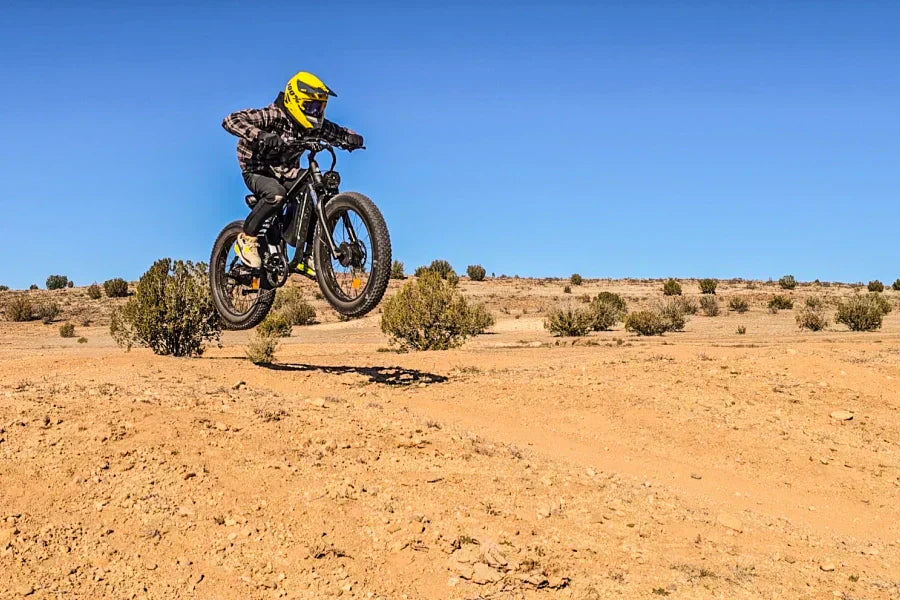
Best Electric Bikes for Mountain Trails and Rough Terrain: The Ultimate Off-Road Performance Guide
Choosing the best electric bikes for mountain trails and rough terrain is a critical decision for any rider looking to conquer the outdoors. Whether you are facing loose shale, muddy ascents, or steep 50-degree inclines, the technical specifications of your e-bike—from motor torque to tire contact patches—determine both your safety and your success on the trail.
The best electric bikes for mountain trails and rough terrain must feature a high torque output (minimum 90Nm, ideally 150Nm+), 4-inch wide fat tires for traction, and a hydraulic braking system for heat management. For extreme gradients, a dual-motor configuration with a 52V or 60V battery system is required to maintain momentum without motor overheating.
- Defining Mountain Trails vs. Rough Terrain (ASTM Standard)
- Motor Engineering: Why Torque Matters More Than Watts
- Battery Science: Voltage and Heat Management on Climbs
- The Physics of Traction: Fat Tires and Terrain Pressure
- Global Regulations: US and Europe E-MTB Laws
- Comparison of High-Performance Models for 2026
- Maintenance and Trail Safety Tips
Defining Mountain Trails vs. Rough Terrain (ASTM Standard)
To identify the best electric bikes for mountain trails and rough terrain, we must utilize the ASTM F2043-13 classification system, which is the industry standard for bicycle usage. Standard pavement bikes are Class 1, whereas true off-road machines fall into Classes 3 and 4.
- Class 3: For rough trails and uneven terrain with jumps less than 61cm (24").
- Class 4: For very rough terrain, extreme downhill, and jumps over 122cm (48").
Rough terrain specifically refers to surfaces with low friction or high resistance, such as deep sand, snow, or loose gravel. Riding in these conditions requires an e-bike capable of "flotation"—the ability to stay on top of the surface rather than sinking into it.
Motor Engineering: Why Torque Matters More Than Watts
In technical mountain riding, peak wattage is often a vanity metric. What truly matters is Newton-meters (Nm) of torque. Torque is the rotational force that allows you to start on a 45-degree incline or push through deep mud.
Most mid-drive e-bikes provide 65-85Nm. However, for extreme rough terrain, dual-motor systems—like those found in the H6PRO—deliver up to 180Nm of peak torque. This power distribution between the front and rear wheels ensures that if one wheel loses traction, the other continues to pull the rider forward, a crucial feature for the best electric bikes for mountain trails and rough terrain.

Battery Science: Voltage and Heat Management on Climbs
Rough terrain places immense stress on the battery's discharge rate. According to the International Electrotechnical Commission (IEC 62133), lithium-ion batteries used in high-stress environments must manage heat effectively to prevent thermal runaway.
A 60V system, such as the one in the Q8plus24, is more efficient than a 48V system for mountain trails. Higher voltage allows for the same power output at a lower current (Amperage), which reduces the heat generated in the wires and the motor. This is why professional-grade off-road e-bikes prioritize voltage to ensure long-term durability during sustained 50° climbs.
The Physics of Traction: Fat Tires and Terrain Pressure
The best electric bikes for mountain trails and rough terrain almost universally utilize 4.0-inch "Fat Tires." The physics behind this is simple: Ground Pressure. By increasing the surface area of the tire (the contact patch), you distribute the weight of the bike and rider over a larger area.
- Low PSI: Fat tires can be run as low as 8-12 PSI for snow and sand.
- Shock Absorption: The large air volume acts as a primary suspension, dampening the micro-vibrations from rocky trails.
- Cornering: Side-wall knobs on 26-inch tires, like those on the H2PRO, provide mechanical "bite" into loose soil.
Global Regulations: US and Europe E-MTB Laws
Understanding where you can legally ride the best electric bikes for mountain trails and rough terrain is essential for compliance with local land management rules.
United States Regulations
The U.S. Consumer Product Safety Commission (CPSC) and the Bureau of Land Management (BLM) generally categorize e-bikes into three classes. However, many high-power mountain bikes fall into the "Off-Road Only" category. It is vital to check if a trail is designated as "Motorized" or "Non-Motorized" before entry.
European Union Standards
Under EU Regulation 168/2013, electric bikes with motors exceeding 250W or speeds above 25km/h are classified as L1e-B mopeds. High-performance models like the Q8plus26, which reaches speeds of 40 MPH, are intended for use on private land or specific off-road tracks within the EU.
Comparison of High-Performance Models for 2026
To help you decide which model fits your specific needs, we have compared the leading configurations below:
| Feature | Q8plus24 (Extreme) | Q8plus26 (High Speed) | H6PRO (Technical) | H2PRO (Versatile) |
|---|---|---|---|---|
| Motor Power | 6000W | 5000W | 3000W (Dual) | 3000W (Dual) |
| Torque | Ultra-High | High | 180Nm | 180Nm |
| Max Incline | 50° | 45° | 45° | 45° |
| Tire Specs | 24*4.0 Fat Tire | 26*4.0 Fat Tire | 24*4.0 Fat Tire | 26*4.0 Fat Tire |
For riders prioritizing raw power on the steepest slopes, the Q8plus24 is the apex choice. For those seeking a taller frame with excellent rollover capabilities for rocky terrain, the H2PRO with its 26-inch wheels provides a superior angle of attack.
Maintenance and Trail Safety Tips
Riding the best electric bikes for mountain trails and rough terrain requires a proactive maintenance schedule to ensure safety in isolated areas.
- Hydraulic Brake Check: Off-road riding generates significant heat. Ensure your hydraulic fluid is bled annually to prevent "brake fade."
- Drivetrain Care: Use a dry lube for dusty mountain trails and a wet lube for muddy rough terrain to prevent abrasive wear on the chain.
- Suspension Tuning: Models like the H6PRO feature dual suspension; ensure the sag is set to approximately 25% of total travel for optimal grip.

FAQ
1. What makes an e-bike suitable for "Rough Terrain"?
A rough terrain e-bike requires fat tires (4" width) for flotation, a torque-heavy motor (90Nm+), and a reinforced frame that meets ASTM Condition 3 or 4 standards for off-road impacts.
2. Can I use a 250W e-bike for mountain trails?
While possible on groomed paths, 250W motors often lack the torque required for technical mountain trails and may overheat on steep inclines. 750W-1500W sustained power is recommended.
3. Are 24-inch or 26-inch tires better for off-road?
24-inch tires offer a lower center of gravity and higher torque efficiency, making them great for technical climbs. 26-inch tires provide a better "roll-over" angle for large rocks and roots.
4. How do dual motors help in rough terrain?
Dual motors provide All-Wheel Drive (AWD). This prevents the rear wheel from spinning out on loose surfaces like gravel or wet grass by sharing the power load with the front wheel.
5. What is the average range on a mountain trail?
On rough terrain, expect 40-60% less range than on flat pavement. For a 20Ah battery, this usually means 30-45 miles of heavy climbing and technical riding.
6. Are hydraulic brakes necessary for the best electric bikes for mountain trails and rough terrain?
Absolutely. Mechanical brakes can fail due to cable stretch and heat on long descents. Hydraulic brakes provide the consistent, high-pressure stopping power needed for heavy e-bikes on steep grades.
Share:
E-Bike at the Lowest Price: The Ultimate Strategic Buying Guide